Situated in the heart of Eurasia, Kazakhstan is the world's largest landlocked country and the ninth largest overall, boasting a vast territory approximately seven times the size of Japan. It is a multi-ethnic state where over 100 ethnic groups harmoniously coexist. The nation presents a striking balance between dynamic economic development, fueled by abundant natural resources, and the pristine natural beauty of its magnificent steppes. Known for its strong pro-Japanese sentiment, Kazakhstan evokes a deep sense of affinity among many Japanese people, who often feel a connection through similarities in appearance and mentality. With a rich history as a vital hub on the Silk Road, Kazakhstan stands today as a leading nation in Central Asia. Political, economic, and cultural exchanges between Kazakhstan and Japan are growing increasingly active year by year.
■Republic of Kazakhstan
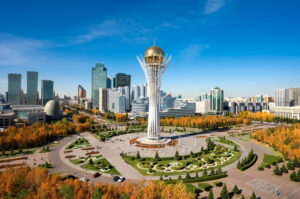
•Capital:Astana
•Area:2,724,900 km² (approx. 7 times the size of Japan)
•Population:Approx. 20 million
•Official Language:Kazakh, Russian
•Currency:Tenge (KZT)
•Major Industries:Mining (oil, gas, uranium), Agriculture, Livestock
■Design and Meaning of the National Flag
•Sky-Blue Background: A symbol of the boundless sky and water, representing peace and prosperity.
•Golden Sun: Represents wealth, abundance, and the energy of life. The 32 rays symbolize grains of abundance.
•Steppe Eagle: A symbol of freedom, power, and the soaring flight toward the future (independence).
•National Ornament: A traditional decorative pattern that reflects the heritage and culture of the Kazakh people.
